Hydration Guidepractical water decisions, safety first

by lifestyle

Water Bottle Cleaning: How To Make The Routine Easier To Repeat

Water Bottle Cleaning is best handled as a routine-design problem. Put water where the day already has cues, such as meals, breaks, commute points, bottle refills, or a planned stop after caffeine or alcohol. Pick one routine cue and attach water to it. This Water Bottle Cleaning page provides general education for generally healthy people and is not medical advice, diagnosis, treatment, prevention, or a personalized fluid prescription; Routine advice must stop at education when symptoms or restrictions appear.

by lifestyleGeneral EducationUses Official Sources

Quick Decision

Decide The Next Move First

What should you decide first in Water Bottle Cleaning, and which answer would be too broad for this situation?

Water Bottle Cleaning helps you decide where the day creates friction and what small habit can actually fit. Start by finding the cue, refill point, schedule gap, shared setup, caffeine or alcohol context, and...

First useful move

Start by naming the decision, then choose the smallest habit-design step that fits the actual situation.

What changes the answer

Centers for Disease Control and Prevention, National Academies Press, Cleveland Clinic, and World Health Organization give Water Bottle Cleaning: How To Make The Routine Easier To Repeat a conservative foundation:...

Stop boundary

Stop treating this as an ordinary decision when symptoms, official advisories, clinician instructions, or higher-risk people are involved.

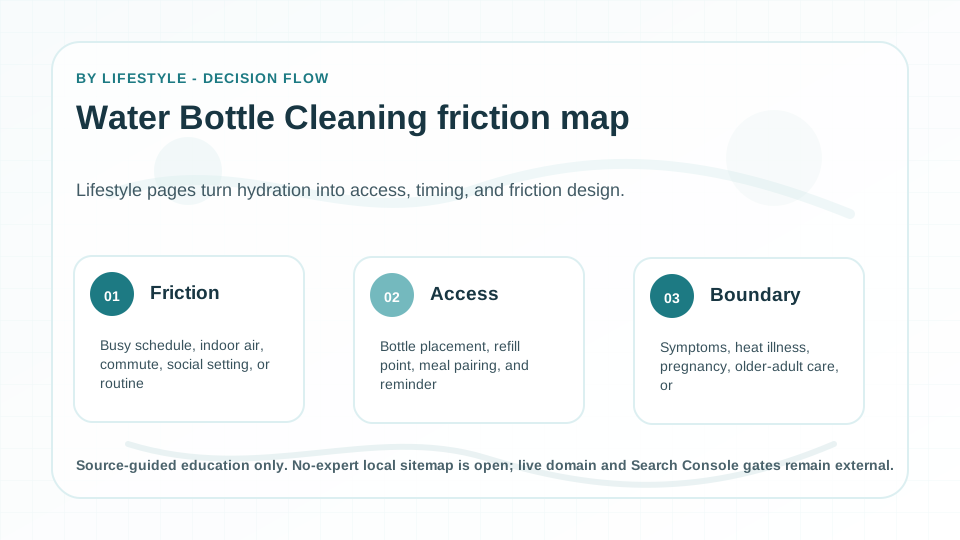
Water Bottle Cleaning friction map. Lifestyle pages turn hydration into access, timing, and friction design.
Lifestyle pages turn hydration into access, timing, and friction design. Primary visual source: project-owned SVG. License note: local site asset. This visual explains the page-specific decision path instead of acting as medical, product, or local water-quality proof.
Safety Boundary

This Water Bottle Cleaning page provides general education for generally healthy people and is not medical advice, diagnosis, treatment, prevention, or a personalized fluid prescription; Routine advice must stop at education when symptoms or restrictions appear.

Main Question

How To Read This Guide

The reader wants a plan that fits a real schedule rather than a generic rule. The page turns water bottle cleaning into a concrete cue, access, and timing plan rather than another daily-water rule.

Decision frame

Water Bottle Cleaning helps you decide where the day creates friction and what small habit can actually fit. Start by finding the cue, refill point, schedule gap, shared setup, caffeine or alcohol context, and access problem; then check refill point, meal timing, work shift, screen session, commute, reminder cue, caffeine or alcohol context, or shared-water setup. The main checks cover where the day creates friction, routine access cues and source boundaries, schedule refill points meals work and travel friction that change, habit design steps to choose. The practical finish is a check or question, not a personal prescription. If symptoms, heat exposure, alcohol, caffeine, fluid restriction, medication question, pregnancy, infant care, or chronic disease is present, use professional or official guidance instead.

What sources clarify

Centers for Disease Control and Prevention, National Academies Press, Cleveland Clinic, and World Health Organization give Water Bottle Cleaning: How To Make The Routine Easier To Repeat a conservative foundation: explain the public concept, check the setting before acting, and keep safety boundaries visible. Centers for Disease Control and Prevention, National Academies Press, and Cleveland Clinic support Water Bottle Cleaning by grounding the guide in general drinking-water education, lower-sugar drink framing, routine cues, and caution boundaries. They help you check refill point, meal timing, work shift, screen session, commute, reminder cue, caffeine or alcohol context, or shared-water setup, while symptoms, heat exposure, alcohol, caffeine, fluid restriction, medication question, pregnancy, infant care, or chronic disease still belongs to a qualified professional, current official instruction, or local evidence. The shared thread is practical restraint. The page can help a reader compare evidence, labels, routine cues, warning language, or local proof, but it should not turn that comparison into personal medical advice, a treatment decision, an emergency judgment, or a claim about a specific household water supply.

Safety boundary

This Water Bottle Cleaning page provides general education for generally healthy people and is not medical advice, diagnosis, treatment, prevention, or a personalized fluid prescription; Routine advice must stop at education when symptoms or restrictions appear.

Decision Snapshot

Water Bottle Cleaning friction map

Lifestyle pages turn hydration into access, timing, and friction design.

Friction

Busy schedule, indoor air, commute, social setting, or routine changes the cue.

Access

Bottle placement, refill point, meal pairing, and reminder timing come first.

Boundary

Symptoms, heat illness, pregnancy, older-adult care, or fluid limits change the answer.

Check 1

Water Bottle Cleaning: Where the day creates friction

What should you decide first in Water Bottle Cleaning, and which answer would be too broad for this situation?

Why this matters

Water Bottle Cleaning becomes vague when it starts with a one-size water habit instead of the decision that changes the next step.

What sources clarify

Centers for Disease Control and Prevention, National Academies Press, and Cleveland Clinic frame the evidence for this topic without proving a personal situation. The first sources separate general hydration context from the narrower routine and public-health framing evidence this guide can explain responsibly.

Real-world scenario

Someone arrives at Water Bottle Cleaning with a routine, symptom cue, product question, or setting that needs a named decision before any steps make sense.

Water Bottle Cleaning is easier to use when the first check starts with refill point, meal timing, work shift, screen session, commute, reminder cue, caffeine or alcohol context, or shared-water setup. Bottle clean routine working question: What should you decide first in this bottle clean routine refill cue, and which answer would be too broad for this situation. Bottle clean routine should start by finding the cue, refill point, schedule gap, shared setup, caffeine or alcohol context, and access problem, then compare the answer with refill point, meal timing, work shift, screen session, commute, reminder cue, caffeine or alcohol context, or shared-water setup; the bottle clean routine becomes vague when it starts with a one-size water habit instead of the decision that changes the next step. If bottle clean routine cannot point to a check, record, comparison, or qualified question, keep the idea as background and use only a small action such as place, refill, pair, record, compare, move the cue, or choose a safety page when the routine is not ordinary.

For bottle clean routine, use Centers for Disease Control and Prevention and National Academies Press to frame routine cues, refill access, lower-sugar drink framing, and situations that need a safety page, then leave personal symptoms, medical limits, medication context, heat exposure, and whether the habit is safe for a specific person outside the claim. Bottle clean routine evidence note: Centers for Disease Control and Prevention, National Academies Press, and Cleveland Clinic frame the evidence for this topic without proving a personal situation; The first sources separate general hydration context from the narrower routine and public-health framing evidence this guide can explain responsibly. Bottle clean routine practical use: turn routine cues, refill access, lower-sugar drink framing, and situations that need a safety page into a specific check without filling in personal symptoms, medical limits, medication context, heat exposure, and whether the habit is safe for a specific person from a broad public source.

Bottle clean routine scenario: someone arrives at Water Bottle Cleaning with a routine, symptom cue, product question, or setting that needs a named decision before any steps make sense. Bottle clean routine record can include the refill point, meal timing, caffeine or alcohol context, work shift, travel segment, reminder cue, or shared-water setup; A desk day, gaming session, commute, caregiving shift, or festival day succeeds or fails on access and cues, not motivation alone. Bottle clean routine setting check: the where the day creates friction angle matters because a routine cue, a water-quality proof question, an exercise recovery issue, and a safety handoff can look similar until the setting is written down; use the setting to decide whether to read, calculate, check a label, open a report, or pause for qualified direction.

Bottle clean routine mistake: the common mistake is answering with a fixed intake target before checking whether routine friction, caffeine, alcohol, heat, or care context changes the safe interpretation. Bottle clean routine correction: Start by naming the decision, then choose the smallest habit-design step that fits the actual situation; Design the next refill point before trying to overhaul the whole day. Bottle clean routine decision note: write down the fact that would change the answer before changing a habit, buying a product, extending a workout plan, or ignoring a warning sign.

After Water Bottle Cleaning, go to Wedding Day when Wedding Day helps for a routine friction check; use it to check routine friction moves to another schedule, access, cue, or refill problem without overstating the current guide; that keeps the follow-up tied to refill point, meal timing, work shift, screen session, commute, reminder cue, caffeine or alcohol context, or shared-water setup. Bottle clean routine boundary: Stop treating this as an ordinary decision when symptoms, official advisories, clinician instructions, or higher-risk people are involved; Symptoms, heat exposure, fluid limits, medication questions, pregnancy, infants, and chronic disease need a more cautious path. For the bottle clean routine, leave the final call to qualified help when symptoms, heat exposure, alcohol, caffeine, fluid restriction, medication question, pregnancy, infant care, or chronic disease appears; this guide can only organize general drinking-water education, lower-sugar drink framing, routine cues, and caution boundaries.

Common mistake

The common mistake is answering with a fixed intake target before checking whether routine friction, caffeine, alcohol, heat, or care context changes the safe interpretation.

Better action

Start by naming the decision, then choose the smallest habit-design step that fits the actual situation.

Stop boundary

Stop treating this as an ordinary decision when symptoms, official advisories, clinician instructions, or higher-risk people are involved.

Check 2

Water Bottle Cleaning: Routine, access, cues, and source boundaries

Which sources can support Water Bottle Cleaning, and which facts still need local, product, or professional verification?

Why this matters

Evidence should show what can be explained without pretending to inspect a person, product batch, home plumbing, or event condition.

What sources clarify

Centers for Disease Control and Prevention, National Academies Press, and Cleveland Clinic frame the evidence for this topic without proving a personal situation. Use the selected sources to compare official guidance, public-health framing, label or report evidence, and clinical education boundaries.

Real-world scenario

Someone reading Water Bottle Cleaning may have a real-world clue such as heat, a water label, a caregiver concern, or a workout plan that the sources only partly address.

A practical Water Bottle Cleaning answer uses the evidence check to separate general drinking-water education, lower-sugar drink framing, routine cues, and caution boundaries from personal symptoms, medical limits, medication context, heat exposure, and whether the habit is safe for a specific person. Bottle clean routine working question: Which sources can support this bottle clean routine refill cue, and which facts still need local, product, or professional verification. Bottle clean routine should start by finding the cue, refill point, schedule gap, shared setup, caffeine or alcohol context, and access problem, then compare the answer with refill point, meal timing, work shift, screen session, commute, reminder cue, caffeine or alcohol context, or shared-water setup; Evidence should show what can be explained without pretending to inspect a person, product batch, home plumbing, or event condition. If bottle clean routine cannot point to a check, record, comparison, or qualified question, keep the idea as background and use only a small action such as place, refill, pair, record, compare, move the cue, or choose a safety page when the routine is not ordinary.

For bottle clean routine, use National Academies Press and Cleveland Clinic to frame routine cues, refill access, lower-sugar drink framing, and situations that need a safety page, then leave personal symptoms, medical limits, medication context, heat exposure, and whether the habit is safe for a specific person outside the claim. Bottle clean routine evidence note: Centers for Disease Control and Prevention, National Academies Press, and Cleveland Clinic frame the evidence for this topic without proving a personal situation; Use the selected sources to compare official guidance, public-health framing, label or report evidence, and clinical education boundaries. Bottle clean routine practical use: turn routine cues, refill access, lower-sugar drink framing, and situations that need a safety page into a specific check without filling in personal symptoms, medical limits, medication context, heat exposure, and whether the habit is safe for a specific person from a broad public source.

Bottle clean routine scenario: someone reading Water Bottle Cleaning may have a real-world clue such as heat, a water label, a caregiver concern, or a workout plan that the sources only partly address. Bottle clean routine record can include the refill point, meal timing, caffeine or alcohol context, work shift, travel segment, reminder cue, or shared-water setup; A desk day, gaming session, commute, caregiving shift, or festival day succeeds or fails on access and cues, not motivation alone. Bottle clean routine setting check: the routine access cues and source boundaries angle matters because a routine cue, a water-quality proof question, an exercise recovery issue, and a safety handoff can look similar until the setting is written down; use the setting to decide whether to read, calculate, check a label, open a report, or pause for qualified direction.

Bottle clean routine mistake: a weak answer would quote a source as if it settled every personal or local detail. Bottle clean routine correction: Translate each source into a check you can verify, record, compare, or bring to a qualified professional; Design the next refill point before trying to overhaul the whole day. Bottle clean routine decision note: write down the fact that would change the answer before changing a habit, buying a product, extending a workout plan, or ignoring a warning sign.

Move from Water Bottle Cleaning to Home Cleaning Day when Use Home Cleaning Day for a source, label, report, or proof check; it helps confirm routine friction moves to another schedule, access, cue, or refill problem with a narrower source or scenario; that path is more useful than adding another broad habit tip. Bottle clean routine boundary: Stop when the evidence would require a test result, medical evaluation, emergency judgment, or current local advisory; Symptoms, heat exposure, fluid limits, medication questions, pregnancy, infants, and chronic disease need a more cautious path. The bottle clean routine stays useful when it explains the source boundary and refuses to choose diagnosis, dosage, treatment, triage, or a private fluid target.

Common mistake

A weak answer would quote a source as if it settled every personal or local detail.

Better action

Translate each source into a check you can verify, record, compare, or bring to a qualified professional.

Stop boundary

Stop when the evidence would require a test result, medical evaluation, emergency judgment, or current local advisory.

Check 3

Water Bottle Cleaning: Schedule, refill points, meals, work, and travel friction that change the habit

What context makes Water Bottle Cleaning different from a broad hydration rule?

Why this matters

The answer needs enough context to avoid copying advice across people, seasons, workouts, symptoms, or water-quality concerns.

What sources clarify

Centers for Disease Control and Prevention, National Academies Press, and Cleveland Clinic frame the evidence for this topic without proving a personal situation. The sources should be connected around context, not listed as separate citations with no practical judgment.

Real-world scenario

For Water Bottle Cleaning, the relevant context might be the person's age, activity duration, heat exposure, product label, report, medication, or symptom pattern.

The context check for Water Bottle Cleaning should leave you with a record, comparison, question, or stop point. Bottle clean routine working question: What context makes this bottle clean routine refill cue different from a broad hydration rule. Bottle clean routine should start by finding the cue, refill point, schedule gap, shared setup, caffeine or alcohol context, and access problem, then compare the answer with refill point, meal timing, work shift, screen session, commute, reminder cue, caffeine or alcohol context, or shared-water setup; The answer needs enough context to avoid copying advice across people, seasons, workouts, symptoms, or water-quality concerns. If bottle clean routine cannot point to a check, record, comparison, or qualified question, keep the idea as background and use only a small action such as place, refill, pair, record, compare, move the cue, or choose a safety page when the routine is not ordinary.

For bottle clean routine, use Cleveland Clinic and World Health Organization to frame routine cues, refill access, lower-sugar drink framing, and situations that need a safety page, then leave personal symptoms, medical limits, medication context, heat exposure, and whether the habit is safe for a specific person outside the claim. Bottle clean routine evidence note: Centers for Disease Control and Prevention, National Academies Press, and Cleveland Clinic frame the evidence for this topic without proving a personal situation; The sources should be connected around context, not listed as separate citations with no practical judgment. Bottle clean routine practical use: turn routine cues, refill access, lower-sugar drink framing, and situations that need a safety page into a specific check without filling in personal symptoms, medical limits, medication context, heat exposure, and whether the habit is safe for a specific person from a broad public source.

Bottle clean routine scenario: for Water Bottle Cleaning, the relevant context might be the person's age, activity duration, heat exposure, product label, report, medication, or symptom pattern. Bottle clean routine record can include the refill point, meal timing, caffeine or alcohol context, work shift, travel segment, reminder cue, or shared-water setup; A desk day, gaming session, commute, caregiving shift, or festival day succeeds or fails on access and cues, not motivation alone. Bottle clean routine setting check: the schedule refill points meals work and travel friction that change angle matters because a routine cue, a water-quality proof question, an exercise recovery issue, and a safety handoff can look similar until the setting is written down; use the setting to decide whether to read, calculate, check a label, open a report, or pause for qualified direction.

Bottle clean routine mistake: the common mistake is treating context as a short caveat instead of the thing that decides the next step. Bottle clean routine correction: Group the context into practical checks so you can decide whether to keep reading, use a tool, or pause; Design the next refill point before trying to overhaul the whole day. Bottle clean routine decision note: write down the fact that would change the answer before changing a habit, buying a product, extending a workout plan, or ignoring a warning sign.

Sauna Visit is the right next stop from Water Bottle Cleaning if the concern becomes Sauna Visit narrows the bottle clean routine for a context check that changes the decision; open it if routine friction moves to another schedule, access, cue, or refill problem is the fact that changes the next step; use it before changing cue, refill point, schedule, access, or routine. Bottle clean routine boundary: Stop when the context points toward urgent help, professional advice, or official local instructions rather than routine education; Symptoms, heat exposure, fluid limits, medication questions, pregnancy, infants, and chronic disease need a more cautious path. For the bottle clean routine schedule check, if the answer depends on work routines, caffeine or alcohol context, care duties, or heat exposure, move from reading to official guidance, local evidence, or a professional conversation.

Common mistake

The common mistake is treating context as a short caveat instead of the thing that decides the next step.

Better action

Group the context into practical checks so you can decide whether to keep reading, use a tool, or pause.

Stop boundary

Stop when the context points toward urgent help, professional advice, or official local instructions rather than routine education.

Check 4

Water Bottle Cleaning: Habit design steps to choose

After understanding Water Bottle Cleaning, what next step is safe without turning the answer into personal medical advice?

Why this matters

A useful guide should end in a clear action path, not a pile of background paragraphs and generic links.

What sources clarify

Centers for Disease Control and Prevention, National Academies Press, and Cleveland Clinic frame the evidence for this topic without proving a personal situation. Use the selected sources to keep the action conservative: check, record, compare, calculate cautiously, or prepare better questions.

Real-world scenario

After Water Bottle Cleaning, the next move may be a calculator, a safety guide, a water-quality record, a label check, or a professional conversation.

Water Bottle Cleaning works best when the mistake check names the missing fact before naming the next action. Bottle clean routine working question: After understanding this bottle clean routine refill cue, what next step is safe without turning the answer into personal medical advice. Bottle clean routine should start by finding the cue, refill point, schedule gap, shared setup, caffeine or alcohol context, and access problem, then compare the answer with refill point, meal timing, work shift, screen session, commute, reminder cue, caffeine or alcohol context, or shared-water setup; A useful guide should end in a clear action path, not a pile of background paragraphs and generic links. If bottle clean routine cannot point to a check, record, comparison, or qualified question, keep the idea as background and use only a small action such as place, refill, pair, record, compare, move the cue, or choose a safety page when the routine is not ordinary.

Bottle clean routine background uses World Health Organization and Centers for Disease Control and Prevention, but keeps the personal or local gap visible: personal symptoms, medical limits, medication context, heat exposure, and whether the habit is safe for a specific person. Bottle clean routine evidence note: Centers for Disease Control and Prevention, National Academies Press, and Cleveland Clinic frame the evidence for this topic without proving a personal situation; Use the selected sources to keep the action conservative: check, record, compare, calculate cautiously, or prepare better questions. Bottle clean routine practical use: turn routine cues, refill access, lower-sugar drink framing, and situations that need a safety page into a specific check without filling in personal symptoms, medical limits, medication context, heat exposure, and whether the habit is safe for a specific person from a broad public source.

Bottle clean routine scenario: after Water Bottle Cleaning, the next move may be a calculator, a safety guide, a water-quality record, a label check, or a professional conversation. Bottle clean routine record can include the refill point, meal timing, caffeine or alcohol context, work shift, travel segment, reminder cue, or shared-water setup; A desk day, gaming session, commute, caregiving shift, or festival day succeeds or fails on access and cues, not motivation alone. Bottle clean routine setting check: the habit design steps to choose angle matters because a routine cue, a water-quality proof question, an exercise recovery issue, and a safety handoff can look similar until the setting is written down; use the setting to decide whether to read, calculate, check a label, open a report, or pause for qualified direction.

Bottle clean routine mistake: the weak action is simply saying to drink more water or open another guide without explaining why. Bottle clean routine correction: Pick one routine cue and attach water to it; Tie that action to a specific guide path so the internal link feels like a decision path; Design the next refill point before trying to overhaul the whole day. Bottle clean routine decision note: write down the fact that would change the answer before changing a habit, buying a product, extending a workout plan, or ignoring a warning sign.

Cold Plunge Day helps once Water Bottle Cleaning turns into Cold Plunge Day narrows the bottle clean routine for a routine friction check; open it if routine friction moves to another schedule, access, cue, or refill problem is the fact that changes the next step; it narrows the next action without making a stronger claim. Bottle clean routine boundary: Stop before giving a dose, diagnosis, treatment plan, emergency decision, or promise that a water choice fixes the concern; Symptoms, heat exposure, fluid limits, medication questions, pregnancy, infants, and chronic disease need a more cautious path. The bottle clean routine schedule check cannot verify personal symptoms, medical limits, medication context, heat exposure, and whether the habit is safe for a specific person; use it to prepare a check, not to make a treatment, emergency, or medication decision.

Common mistake

The weak action is simply saying to drink more water or open another guide without explaining why.

Better action

Pick one routine cue and attach water to it. Tie that action to a specific page path so the internal link feels like a decision path.

Stop boundary

Stop before giving a dose, diagnosis, treatment plan, emergency decision, or promise that a water choice fixes the concern.

Check 5

Water Bottle Cleaning: Lifestyle tips pretending to be health rules and what not to infer

What might someone wrongly infer from Water Bottle Cleaning, and what should the answer explicitly not claim?

Why this matters

High-trust hydration topics need explicit guardrails because general cues can easily turn into personal certainty.

What sources clarify

Centers for Disease Control and Prevention, National Academies Press, and Cleveland Clinic frame the evidence for this topic without proving a personal situation. The sources should be used to name evidence limits, not to decorate a conclusion the guide already wanted to make.

Real-world scenario

Someone may over-apply Water Bottle Cleaning to pregnancy, children, older adults, endurance events, illness, contaminated water, or medication contexts.

The next-step check for Water Bottle Cleaning should leave you with a record, comparison, question, or stop point. Bottle clean routine working question: What might someone wrongly infer from this bottle clean routine refill cue, and what should the answer explicitly not claim. Bottle clean routine should start by finding the cue, refill point, schedule gap, shared setup, caffeine or alcohol context, and access problem, then compare the answer with refill point, meal timing, work shift, screen session, commute, reminder cue, caffeine or alcohol context, or shared-water setup; High-trust hydration topics need explicit guardrails because general cues can easily turn into personal certainty. If bottle clean routine cannot point to a check, record, comparison, or qualified question, keep the idea as background and use only a small action such as place, refill, pair, record, compare, move the cue, or choose a safety page when the routine is not ordinary.

Bottle clean routine starts with Centers for Disease Control and Prevention and National Academies Press; the practical job is to check general drinking-water education, lower-sugar drink framing, routine cues, and caution boundaries without filling in personal symptoms, medical limits, medication context, heat exposure, and whether the habit is safe for a specific person. Bottle clean routine evidence note: Centers for Disease Control and Prevention, National Academies Press, and Cleveland Clinic frame the evidence for this topic without proving a personal situation; The sources should be used to name evidence limits, not to decorate a conclusion the guide already wanted to make. Bottle clean routine practical use: turn routine cues, refill access, lower-sugar drink framing, and situations that need a safety page into a specific check without filling in personal symptoms, medical limits, medication context, heat exposure, and whether the habit is safe for a specific person from a broad public source.

Bottle clean routine scenario: someone may over-apply Water Bottle Cleaning to pregnancy, children, older adults, endurance events, illness, contaminated water, or medication contexts. Bottle clean routine record can include the refill point, meal timing, caffeine or alcohol context, work shift, travel segment, reminder cue, or shared-water setup; A desk day, gaming session, commute, caregiving shift, or festival day succeeds or fails on access and cues, not motivation alone. Bottle clean routine setting check: the lifestyle tips pretending to be health rules and what not angle matters because a routine cue, a water-quality proof question, an exercise recovery issue, and a safety handoff can look similar until the setting is written down; use the setting to decide whether to read, calculate, check a label, open a report, or pause for qualified direction.

Bottle clean routine mistake: the common mistake is assuming the guide proves safety, quality, or health status for an exact personal situation. Bottle clean routine correction: End with the safest interpretation, then point to the most relevant internal guide for the next question; Design the next refill point before trying to overhaul the whole day. Bottle clean routine decision note: write down the fact that would change the answer before changing a habit, buying a product, extending a workout plan, or ignoring a warning sign.

After Water Bottle Cleaning, go to Sick Day Caution when Use Sick Day Caution for a lifestyle-tip or health-rule check; it helps confirm routine friction moves to another schedule, access, cue, or refill problem with a narrower source or scenario; that keeps the follow-up tied to refill point, meal timing, work shift, screen session, commute, reminder cue, caffeine or alcohol context, or shared-water setup. Bottle clean routine boundary: Stop when the question becomes personal risk, symptoms, fluid restriction, local contamination, or urgent heat or illness concern; Symptoms, heat exposure, fluid limits, medication questions, pregnancy, infants, and chronic disease need a more cautious path. Do not let the bottle clean routine become a personal prescription; keep records and ask for qualified help when symptoms, heat exposure, alcohol, caffeine, fluid restriction, medication question, pregnancy, infant care, or chronic disease is present.

Common mistake

The common mistake is assuming the guide proves safety, quality, or health status for an exact personal situation.

Better action

End with the safest interpretation, then point to the most relevant internal guide for the next question.

Stop boundary

Stop when the question becomes personal risk, symptoms, fluid restriction, local contamination, or urgent heat or illness concern.

Where To Go Next

Sources Used

Centers for Disease Control and PreventionPlain-water and lower-sugar drink framing for general public health education. For Water Bottle Cleaning: How To Make The Routine Easier To Repeat, use it to compare official framing, local checks, practical cautions, and safer next steps.National Academies PressAdequate intake context and the distinction between total water, beverages, and food water. For Water Bottle Cleaning: How To Make The Routine Easier To Repeat, use it to compare official framing, local checks, practical cautions, and safer next steps.Cleveland ClinicDehydration symptom education, risk-factor context, and when-to-seek-care framing. For Water Bottle Cleaning: How To Make The Routine Easier To Repeat, use it to compare official framing, local checks, practical cautions, and safer next steps.World Health OrganizationWHO drinking-water quality guideline summary, source-to-tap safety context, risk boundaries, and why local verification still matters. For Water Bottle Cleaning: How To Make The Routine Easier To Repeat, use it to compare official framing, local checks, practical cautions, and safer next steps.Centers for Disease Control and PreventionHeat-related illness warning signs, heat stroke emergency boundary, and why severe heat symptoms need urgent action. For Water Bottle Cleaning: How To Make The Routine Easier To Repeat, use it to compare official framing, local checks, practical cautions, and safer next steps.Centers for Disease Control and PreventionAdded-sugar education for beverage choices, label comparison, and sugar-sweetened drink reduction pages. For Water Bottle Cleaning: How To Make The Routine Easier To Repeat, use it to compare official framing, local checks, practical cautions, and safer next steps.