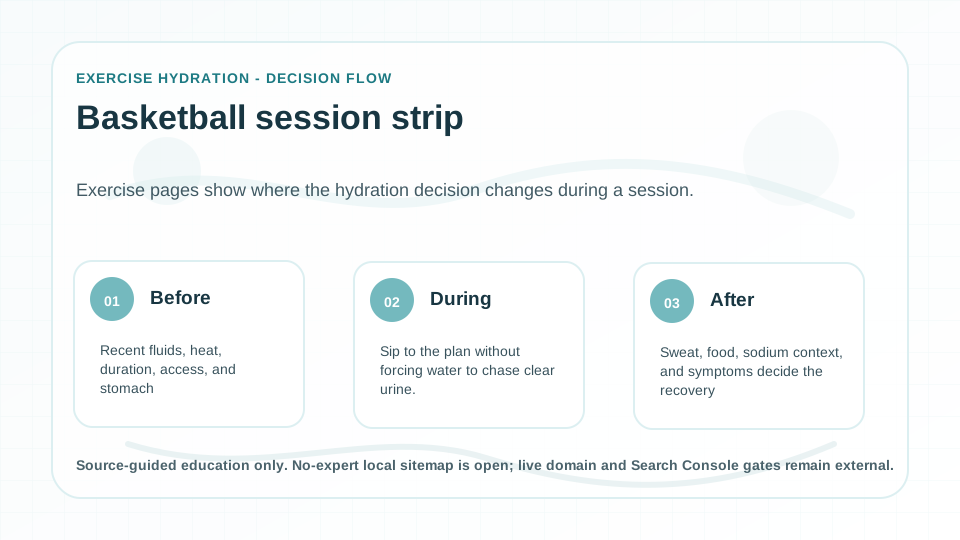
A practical Basketball answer uses the first check to separate exercise fluid guidance, sweat-loss framing, heat exposure, and overdrinking-risk boundaries from your sweat rate, sodium status, illness, medication context, race conditions, and symptoms. Court session working question: What should you decide first in the court session sweat check, and which answer would be too broad for this situation. Court session should start by naming the session length, heat, intensity, sweat pattern, recovery cue, and overdrinking risk, then compare the answer with workout duration, heat index, sweat pattern, race timing, recovery cue, sodium concern, and what happened before and after the session; the court session sweat check becomes vague when it starts with a one-size water habit instead of the decision that changes the next step. If court session cannot point to a check, record, comparison, or qualified question, keep the idea as background and use only a small action such as plan, sip, compare, record, slow down, or ask for help when warning signs appear.
Court session background uses Centers for Disease Control and Prevention and Mayo Clinic, but keeps the personal or local gap visible: your sweat rate, sodium status, illness, medication context, race conditions, and symptoms. Court session evidence note: Centers for Disease Control and Prevention, Mayo Clinic, and Journal of Athletic Training / NATA frame the evidence for this topic without proving a personal situation; The first sources separate general hydration context from the narrower exercise fluid and overdrinking-risk evidence this guide can explain responsibly. Court session practical use: turn session timing, heat exposure, sweat-loss framing, recovery checks, and overdrinking boundaries into a specific check without filling in your sweat rate, sodium status, illness, medication context, race conditions, and symptoms from a broad public source.
Court session scenario: someone arrives at Basketball with a routine, symptom cue, product question, or setting that needs a named decision before any steps make sense. Court session record can include the session length, heat index, sweat pattern, race timing, recovery cue, sodium risk, or what happened before and after the workout; A short easy session, a hot long run, a race, and a sauna recovery block do not deserve the same answer. Court session setting check: the how the session changes ordinary hydration angle matters because a routine cue, a water-quality proof question, an exercise recovery issue, and a safety handoff can look similar until the setting is written down; use the setting to decide whether to read, calculate, check a label, open a report, or pause for qualified direction.
Court session mistake: the common mistake is answering with a fixed intake target before checking whether heat, duration, sweat, sodium, or endurance risk changes the safe interpretation. Court session correction: Start by naming the decision, then choose the smallest session-planning step that fits the actual situation; Plan around the session instead of chasing a fixed bottle count. Court session decision note: write down the fact that would change the answer before changing a habit, buying a product, extending a workout plan, or ignoring a warning sign.
Sauna After Workout belongs here if Sauna After Workout narrows Basketball for a session context check; open it if heat, duration, sweat, recovery, or overdrinking risk changes the session is the fact that changes the next step; otherwise keep the current check conservative and source-based. Court session boundary: Stop treating this as an ordinary decision when symptoms, official advisories, clinician instructions, or higher-risk people are involved; Symptoms, heat illness signs, swollen hands, confusion, rapid weight gain, or known fluid limits should stop routine exercise advice. This court session recovery plan cannot verify your sweat rate, sodium status, illness, medication context, race conditions, and symptoms; use it to prepare a check, not to make a treatment, emergency, or medication decision.