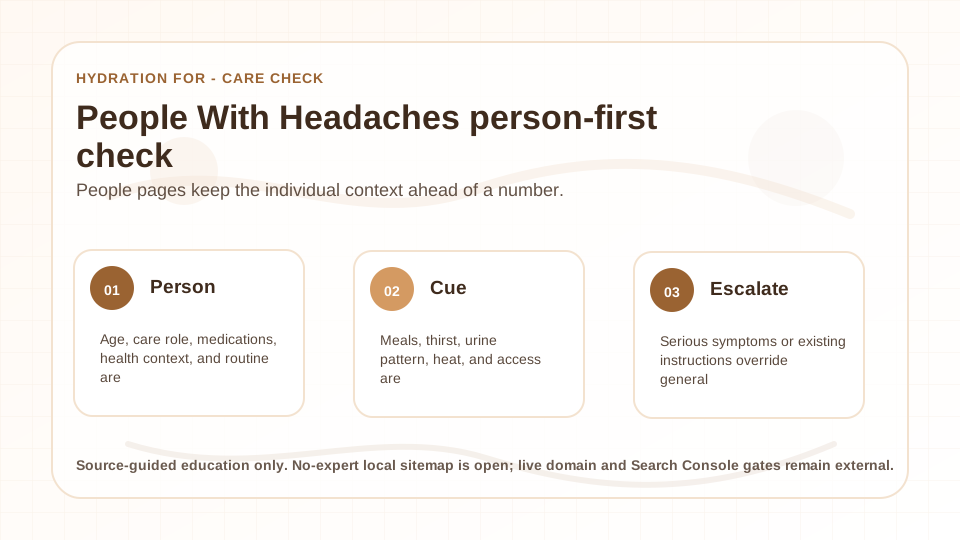
The first check in People With Headaches should fit the situation before it changes routine, care note, professional question, or safety route. Headache care context working question: What should you decide first in the headache care context, and which answer would be too broad for this situation. Headache care context should start by identifying who the guidance is for and which caution line changes the ordinary habit, then compare the answer with age, care role, routine cue, clinician instruction, fluid limit, medication question, symptom pattern, or caregiver note; the headache care context becomes vague when it starts with a one-size water habit instead of the decision that changes the next step. If headache care context cannot point to a check, record, comparison, or qualified question, keep the idea as background and use only a small action such as record the context, ask the right professional question, use a cautious tool, or choose a safety page.
Headache care context should treat National Academies Press and Cleveland Clinic as a boundary, not a shortcut; the evidence role is general hydration context, risk-factor education, and group-specific caution language. Headache care context evidence note: National Academies Press, Cleveland Clinic, and World Health Organization frame the evidence for this topic without proving a personal situation; The first sources separate general hydration context from the narrower person-specific caution and general guidance evidence this guide can explain responsibly. Headache care context practical use: turn general hydration context, group-specific cautions, care notes, and professional handoff points into a specific check without filling in personal diagnosis, treatment plan, fluid target, medication interaction, pregnancy risk, and clinician instruction from a broad public source.
Headache care context scenario: someone arrives at People With Headaches with a routine, symptom cue, product question, or setting that needs a named decision before any steps make sense. Headache care context record can include the person's age, care role, routine cue, clinician instruction, fluid limit, medication question, or caregiver note; A teen athlete, an older adult, a pregnant person, and someone told to limit fluids need different caution lines even when the habit looks similar. Headache care context setting check: the how the person changes ordinary advice angle matters because a routine cue, a water-quality proof question, an exercise recovery issue, and a safety handoff can look similar until the setting is written down; use the setting to decide whether to read, calculate, check a label, open a report, or pause for qualified direction.
Headache care context mistake: the common mistake is answering with a fixed intake target before checking whether age, pregnancy, medication, condition, or care context changes the safe interpretation. Headache care context correction: Start by naming the decision, then choose the smallest person-specific check that fits the actual situation; Keep the action focused on records and questions rather than a new personal target. Headache care context decision note: write down the fact that would change the answer before changing a habit, buying a product, extending a workout plan, or ignoring a warning sign.
After People With Headaches, go to People Recovering From Stomach Illness when Use People Recovering From Stomach Illness for a narrower decision check; it helps confirm the person applying the advice changes to a different risk, role, or care situation with a narrower source or scenario; that keeps the follow-up tied to age, care role, routine cue, clinician instruction, fluid limit, medication question, symptom pattern, or caregiver note. Headache care context boundary: Stop treating this as an ordinary decision when symptoms, official advisories, clinician instructions, or higher-risk people are involved; Clinician instructions, symptoms, pregnancy, infants, older-adult care concerns, fluid limits, and chronic disease should override general education. Do not let the headache care context routine become a personal prescription; keep records and ask for qualified help when pregnancy, children, older adults, fluid restriction, organ disease, medication context, symptoms, or caregiver concern is present.