calculators
Water Intake Calculator
Water Intake Calculator is useful only when it outputs a range and shows when not to personalize the result. Risk flags matter as much as the number. Enter weight, activity, climate, and risk flags; use the output as an educational range. This Water Intake Calculator page provides general education for generally healthy people and is not medical advice, diagnosis, treatment, prevention, or a personalized fluid prescription; Risk flags must stop personalized targets and recommend clinician guidance.
This Water Intake Calculator page provides general education for generally healthy people and is not medical advice, diagnosis, treatment, prevention, or a personalized fluid prescription; Risk flags must stop personalized targets and recommend clinician guidance.
Daily Water Range
Water Type Comparison
Tap
Daily convenience when the local report and home plumbing are acceptable.
Consumer Confidence Report, local alerts, and older plumbing risk.Filtered
A specific taste or contaminant concern when the filter is certified for that concern.
Certification label, replacement schedule, and the contaminant it actually reduces.Seasonal Planner
- Carry water before thirst becomes the only cue.
- Add shade breaks and cooling time.
- Treat confusion, fainting, or heat illness signs as urgent.
Urine Color Cue
Checklist And Reminder Plan
Choose a situation, keep the plan local, and print it when useful.
Everyday checklist
- Keep water visible during the first half of the day.
- Use meals as refill cues instead of chasing a fixed number.
- Pause when thirst, urine color, heat, or activity tells a different story.
- Use safety pages when symptoms or fluid limits enter the picture.
Steady day rhythm
Simple 7-day check follow-up
Saved plans stay in this browser only.
Filter Proof Checklist
Match the concern to proof before a product decision.
This checklist is evidence routing only. It does not recommend a brand, collect data, or prove a home water source is safe.
What To Do First
Enter weight, activity, climate, and risk flags; use the output as an educational range.
When This Page Helps
A reader wants cups, ounces, and liters without a rigid one-number answer.
A range-based calculator with day rhythm.
A better daily estimate starts with the day in front of you
Use the calculator the way an editor would test a recommendation: start with a normal day, then ask what changed. A desk day, a hot commute, a salty meal, and a late workout should not all produce the same practical plan.
- On an office-air-conditioning day, use meals and refill breaks before adding a large evening catch-up.
- On a humid commute, carry water earlier and watch heat symptoms instead of simply chasing a higher cup total.
- If a fluid-limit box is checked, stop using the number as a target and use the page as preparation for a clinician conversation.
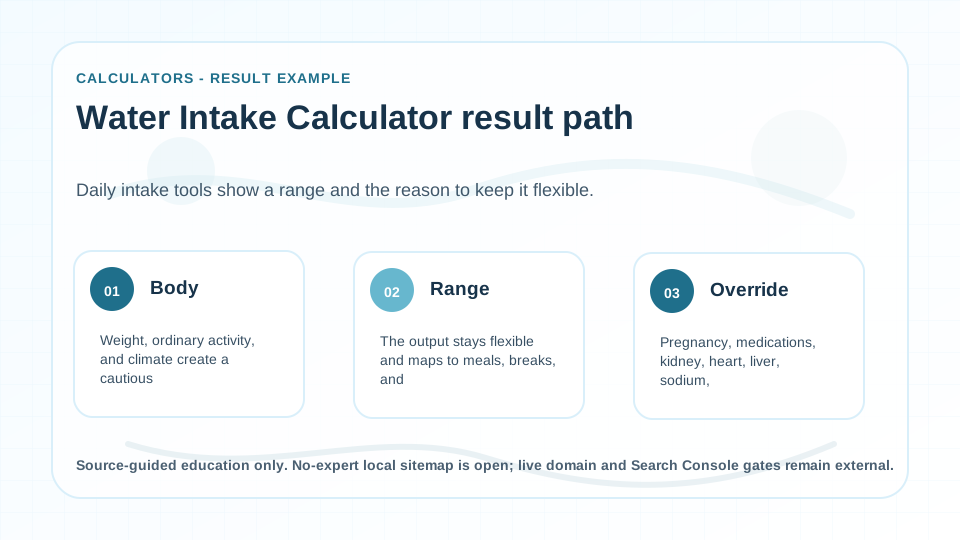
Water Intake Calculator result path
Daily intake tools show a range and the reason to keep it flexible.
Weight, ordinary activity, and climate create a cautious starting range.
The output stays flexible and maps to meals, breaks, and normal cues.
Pregnancy, medications, kidney, heart, liver, sodium, or fluid limits come first.
Use Water Intake Calculator as a range, not a rule
Guidance from National Academies Press and Centers for Disease Control and Prevention frames this page as practical education for a specific reader task, not as a universal drinking rule or medical instruction. A calculator page is strongest when it shows uncertainty and makes stop flags easier to notice.
Water Intake Calculator is best for readers who want a practical estimate while still respecting symptoms, conditions, and context.
The common mistake is treating the output as a prescription, then forcing the number even when the day or body disagrees.
Enter weight, activity, climate, and risk flags; use the output as an educational range. Spread the result across ordinary cues such as meals, breaks, workouts, and evening comfort.
Stop personalizing the result when fluid restriction, pregnancy, infant care, kidney, heart, liver, sodium, or severe symptoms apply.
Before You Use This Page
- Name the real situation before applying Water Intake Calculator; the page is strongest when the reader has a concrete task.
- Use the next action first: Enter weight, activity, climate, and risk flags; use the output as an educational range.
- Check the exception line before making the advice personal: Risk flags must stop personalized targets and recommend clinician guidance.
- Confirm the source context with National Academies Press before treating this as more than general education.
- Treat the result as a range and spread it across normal meals, breaks, workouts, and evening comfort.
- Stop personalizing the result when the inputs hide symptoms, medical instructions, or fluid-restriction concerns.
Decision Checkpoints
Inputs to trust for Water Intake CalculatorMake the estimate useful without pretending it is a prescription.
Guidance from National Academies Press and Centers for Disease Control and Prevention supports range-based guidance for generally healthy people, not a fixed rule for everyone.
Enter ordinary day context and keep the output as a range.
Sweat, duration, weather, and clothing can change practical timing before they change a daily target.
Adjust timing and carry plan before chasing a precise number.
Fluid restriction, kidney, heart, liver, sodium, pregnancy, infant care, or serious symptoms can invalidate personalization.
Use the calculator as education only and ask a clinician when stop flags apply.
How to use the result from Water Intake CalculatorTurn the output into a safer next action.
Large one-time drinking is less useful than a repeatable rhythm across meals, breaks, exercise, and evening.
Map the result to normal refill points instead of front-loading water.
Thirst, urine pattern, stomach comfort, sleep disruption, and swelling can show the plan is not fitting.
Scale back or review the plan when the routine creates new problems.
Confusion, fainting, seizures, heat illness signs, severe vomiting, or rapid worsening are outside calculator use.
Seek urgent medical guidance instead of changing the calculator inputs again.
FAQ
Is water intake calculator medical advice?
Water Intake Calculator is general education, not professional medical advice. It should not replace diagnosis, treatment, prevention, a clinician's instructions, or urgent care when symptoms are serious.
What should I check first for water intake calculator?
Enter weight, activity, climate, and risk flags; use the output as an educational range. For water intake calculator, the first check should match the actual task rather than defaulting to more water.
Who should be more cautious with water intake calculator?
Risk flags must stop personalized targets and recommend clinician guidance. That means water intake calculator should be treated differently when symptoms, medical conditions, medications, pregnancy, infant care, older adult care, heat illness, or fluid restriction are involved.
What makes water intake calculator different from a general hydration rule?
Water Intake Calculator is only useful when the output remains a range and risk flags stop the calculator from sounding more certain than it is.
Inputs that matter for Water Intake Calculator
Enter weight, activity, climate, and risk flags; use the output as an educational range. Weight, activity, heat, duration, and special conditions should change the output or stop personalization.
- Water Intake Calculator is useful only when the output remains a range and stop flags are visible.
- Weight, activity, heat, duration, timing, and special conditions should change or stop personalization.
- The result must not override symptoms, medical advice, fluid restriction, infant care, pregnancy guidance, or endurance safety.
- National Academies Press anchors this section for Adequate intake context and the distinction between total water, beverages, and food water.
What the result should not do
The output should not override fluid restriction, medical advice, symptoms, pregnancy guidance, infant care, or endurance-event safety.
- Water Intake Calculator is useful only when the output remains a range and stop flags are visible.
- Weight, activity, heat, duration, timing, and special conditions should change or stop personalization.
- The result must not override symptoms, medical advice, fluid restriction, infant care, pregnancy guidance, or endurance safety.
- Centers for Disease Control and Prevention anchors this section for Plain-water and lower-sugar drink framing for general public health education.
Evidence limit for Water Intake Calculator
National Academies Press and Centers for Disease Control and Prevention support the general framing, but they do not verify an individual reader's health condition, home plumbing, product batch, race plan, or clinician instruction. Stop before turning this page into a personal fluid target. Risk flags must stop personalized targets and recommend clinician guidance.
- Water Intake Calculator is useful only when the output remains a range and stop flags are visible.
- Weight, activity, heat, duration, timing, and special conditions should change or stop personalization.
- The result must not override symptoms, medical advice, fluid restriction, infant care, pregnancy guidance, or endurance safety.
- National Academies Press anchors this section for Adequate intake context and the distinction between total water, beverages, and food water.
Use Water Intake Calculator as a range
A reader wants cups, ounces, and liters without a rigid one-number answer. A calculator is helpful only when it shows uncertainty and makes risk flags visible.
- Water Intake Calculator is useful only when the output remains a range and stop flags are visible.
- Weight, activity, heat, duration, timing, and special conditions should change or stop personalization.
- The result must not override symptoms, medical advice, fluid restriction, infant care, pregnancy guidance, or endurance safety.
- Centers for Disease Control and Prevention anchors this section for Plain-water and lower-sugar drink framing for general public health education.